

Image
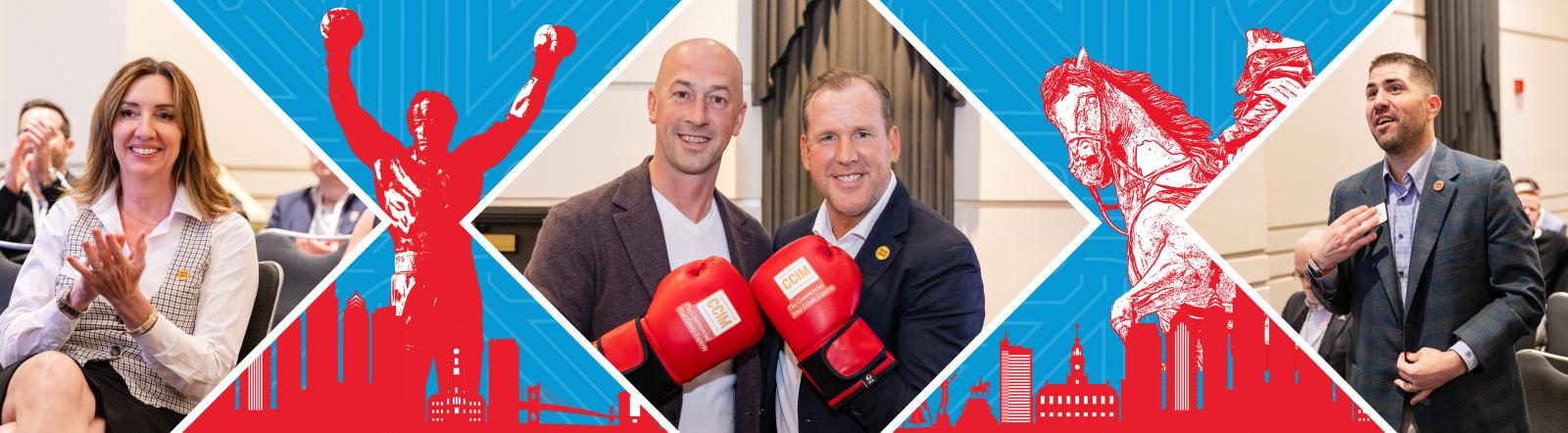
Inside “The Hot Seat”: Leadership, Growth, and the Future of The CCIM Institute
Intro Text
Perspectives on The CCIM Institute's opportunities and challenges from top leadership.
May 06, 2026
Panelists:
Adam Palmer, CCIM, SIOR (The CCIM Institute 2026 Global President)
Paul Rumler, CCIM (The CCIM Institute CEO/EVP)
In a candid and wide-ranging panel discussion, The CCIM Institute leaders Adam Palmer, CCIM, SIOR, (2026 Global President) and Paul Rumler, CCIM (Chief Executive Officer) pulled back the curtain on the organization’s biggest opportunities —and challenges. Framed as an “unfiltered and sometimes uncomfortable conversation,” the session delivered exactly that: a transparent look at strategy, growth, and the realities of running a member-driven organization in a rapidly evolving industry.
The discussion took place during The CCIM Institute’s 2026 Spring Forum in Philadelphia.
One of the central themes was growth, particularly the balance between expanding globally while maintaining strong domestic operations. Rumler was clear that this isn’t an either-or decision. “You have to do both. This is not a question of either-or,” he said, emphasizing that the real constraint isn’t ambition, but capacity.
System limitations and staffing resources have slowed progress at times, but momentum is building. In the past two years alone, The Institute has established partnerships in markets like Kazakhstan, Jamaica, and the UAE—without reducing services in the U.S.
That balancing act extends to membership growth. While some organizations worry about dilution, Rumler sees significant upsides. “We can be twice the size… three times… five times—that’s not the problem,” he said.
The key, however, is maintaining the integrity of The CCIM Designation. “What we shouldn’t do is dilute the value of the Designation,” he added, reinforcing the importance of staying focused on The Institute’s core offering.
That focus on the Designation led to one of the most striking parts of the conversation: Rumler’s firsthand experience as a candidate. While he praised the curriculum— “the content is stellar… the instructors are top notch” —he didn’t hold back on the process itself. “We make the candidate experience as bad as possible,” he said bluntly, noting that confusing systems and lack of support can discourage engagement. Improving that experience has become a top priority, with new initiatives already under way.
Technology is a major part of that solution. The Institute is rethinking its systems from the ground up, moving toward simpler, more flexible platforms. “If we create a system that is simpler in nature, we can actually be more nimble,” Rumler explained. Rather than trying to become a software company, the strategy now is to leverage existing tools and adapt them using emerging technologies like AI.
Financial investment is another critical factor. Revitalizing the Designation and upgrading systems will require significant resources, but leadership sees this as essential. “We have to continue to invest in our product… if we don’t, we might as well just pack up and close the door,” Rumler said. At the same time, he expressed confidence that The Institute can manage these investments while maintaining financial stability.
The conversation also touched on external relationships, particularly with the National Association of Realtors (NAR). While some members have expressed concern about that affiliation, Rumler sees opportunity.
“There is goodness in NAR,” he said, pointing to its advocacy capabilities as a valuable resource for CCIM members. Strengthening that relationship, especially around commercial advocacy, remains a key strategic goal.
Perhaps the most candid discussion centered on organizational structure and decision-making. Rumler acknowledged the challenges of operating within a volunteer-led model, where consensus-building can slow progress.
“It can’t take three years to make a decision. It has to be done in three weeks sometimes,” he said, calling for greater agility and a willingness to act decisively.
That urgency ties back to a broader question raised during the panel: what kind of organization should The CCIM Institute be? Palmer framed it as a choice between being a “Ferrari” or a “Camry”— elite but exclusive, or accessible but less differentiated. Rumler’s response struck a middle ground. “We’re not going to be a Ferrari… but let’s be the best designation that we can be,” he said.
Underlying that answer is a call for confidence. Rumler challenged members and leadership alike to embrace The Institute’s value proposition more boldly. “We need to be able to go out there and say… that we are the best,” he said, urging a shift toward stronger messaging and clearer identity.
Ultimately, the panel highlighted an organization at a pivotal moment—balancing growth with quality, tradition with innovation, and ambition with capacity. If there was one clear takeaway, it’s that the path forward will require both investment and introspection.
As Rumler put it, the goal isn’t just to grow—it’s to build something worth believing in.