

Image
Deep Dive: AI & The Future of Commercial Real Estate
Intro Text
Thought leaders in AI in the CRE space take on the deeper questions.
May 06, 2026
Moderator:
Dave Gambaccini, CCIM (Commercial Real Estate Developer, Fulcrum)
Panelists:
Bo Barron, CCIM (CEO, Barron Commercial Group)
Bryant Cheely (Learning & Product Improvement Specialist, CCIM Technologies, Inc.)
Gregg Katz (Director of Business Industry Solutions - Real Estate, Esri)
Michael Hironimus, CCIM (Founder of PropTech Integrations)
The conversation around artificial intelligence in commercial real estate is no longer theoretical; it’s happening now, and at speed. In a recent panel discussion, industry leaders unpacked how AI is reshaping workflows, decision-making, and even career paths across the sector.
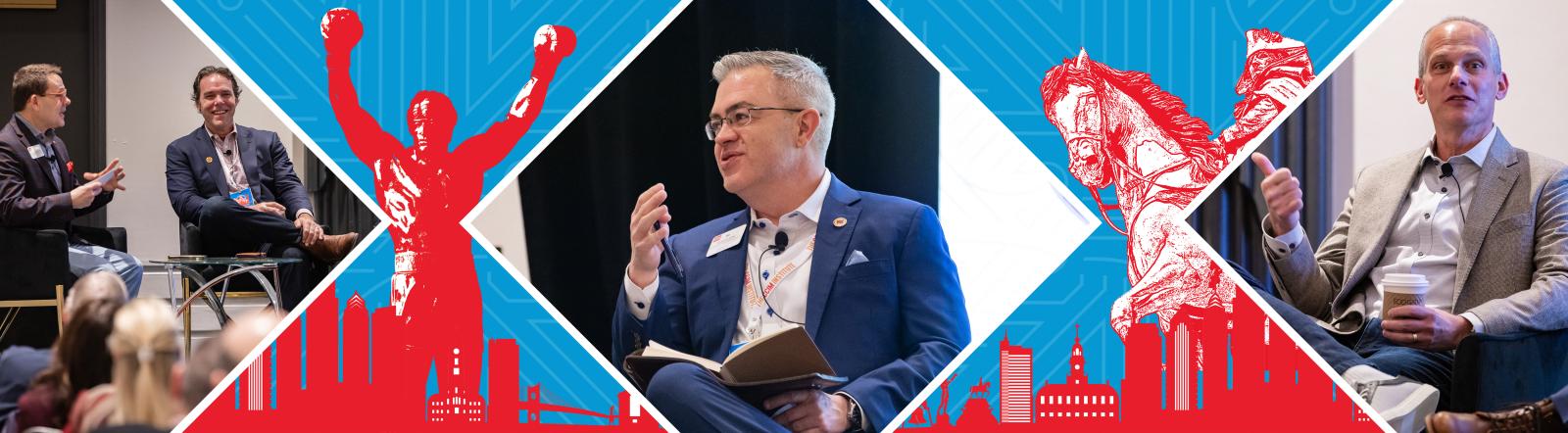
During The CCIM Institute 2026 Spring Forum, Dave Gambaccini, CCIM, moderated the “AI & The Future of Commercial Real Estate” panel on April 21, 2026.
For many, the journey into AI started with a moment of realization. Michael Hironimus, CCIM, recalled being “absolutely blown away” when he first encountered early AI tools, immediately thinking, “this is the future,” prompting him to “jump in with both feet”. Bryant Cheely saw AI as a way to “bridge the gap” and accelerate his learning curve, while Gregg Katz offered a more measured perspective, noting that the real danger lies in “fully accepting of what comes out” without questioning it . Bo Barron, CCIM, added a practical lens, explaining that he doesn’t need to fully understand how AI works—he simply uses it to “get faster and do better work,” a sentiment that reflects how many professionals are approaching adoption today.
Despite the enthusiasm, the panel repeatedly emphasized that AI should enhance—not replace—human expertise. CRE remains a relationship-driven business, and as Katz pointed out, “nothing beats local market knowledge” when it comes to understanding deals, trends, and opportunities. The risk, as several panelists highlighted, is that overreliance on AI could create a generation of professionals who “sound like they know what they are doing without actually doing the work,” ultimately leading to credibility and liability issues. Hironimus raised concerns about junior brokers missing out on foundational experience as AI takes over entry-level tasks, while Barron warned against becoming an “empty suit” by outsourcing too much thinking to machines. At the same time, the panel encouraged experimentation as the best entry point: “you dive in and you experiment,” Katz advised, reinforcing that hands-on exploration is critical to understanding AI’s value.
Ultimately, the panel landed on a clear takeaway: those who learn to use AI thoughtfully—as a brainstorming partner, efficiency tool, and strategic enhancer—will have a competitive edge. Hironimus described AI as a “boardroom” of experts that can challenge ideas and expand thinking, while Cheely emphasized the importance of building “context” through ongoing interaction to improve outputs.
For professionals unsure where to start, the advice was simple: start small, ask questions, and treat AI like an intern that improves with guidance. The future of CRE won’t be defined by AI alone—but by the people who know how to use it wisely.