

Image
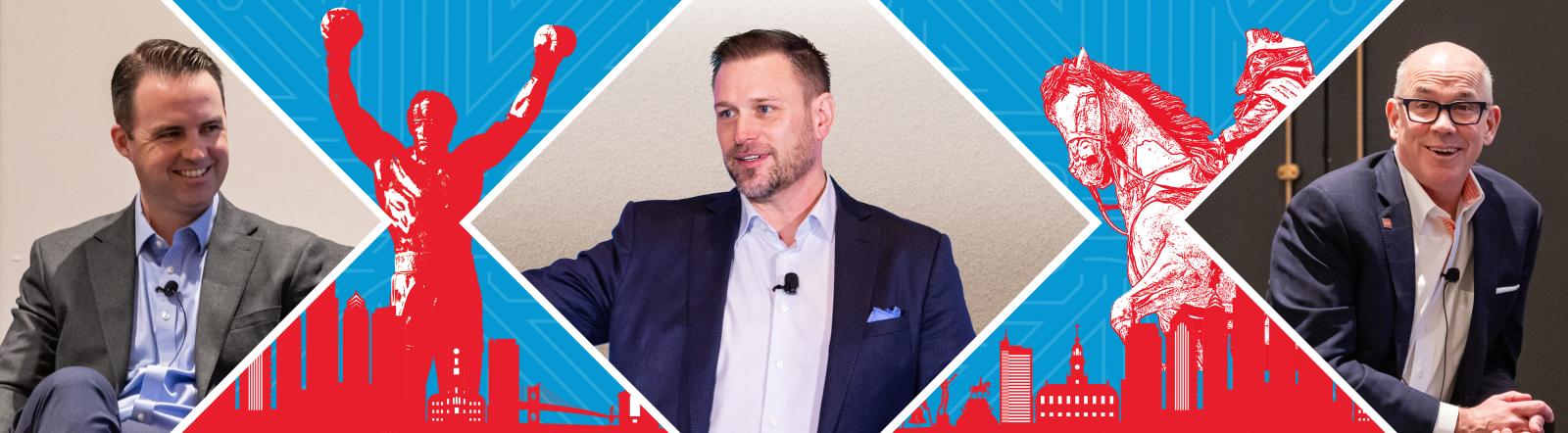
Capital Markets in Flux: Opportunity, Risk, and the Return to Fundamentals
Intro Text
Panelists discussed where the capital is and where it's going in CRE.
May 06, 2026
Moderator:
Chris Jacobson, CCIM (Vice President of Healthcare Real Estate Advisor, Lee & Associates)
Panelists:
Kevin Fagan (Senior Director - Head of CRE Capital Market Research, Moody's Analytics)
Joe McBride, CFA (Senior Director at SitusAMC)
Shruti Mishra (Economist, Bank of America U.S.)
“Buckle up, because this conversation is where the money actually moves,” set the tone for a wide-ranging discussion on the realities of today’s capital markets. That framing proved accurate: across debt, equity, and macroeconomic conditions, panelists painted a picture of a market in transition, one defined by both abundant capital and persistent uncertainty.
The panel, Capital Markets Unlocked: Debt, Equity, & Opportunity Ahead, took place April 20, 2026, during the first full day of The CCIM Institute 2026 Spring Forum in Philadelphia.
Moderator Chris Jacobson, CCIM, grounded the discussion in real-world application, particularly within healthcare real estate. While often viewed as a safe haven, he emphasized that even this sector is evolving.
“Healthcare… is probably the most stable asset class,” he noted, but added that today’s environment requires deeper involvement from investors, as “the building sees the patient before the doctor does.” Stability, in other words, no longer means simplicity.
From the capital stack perspective, Joe McBride, CFA, framed the conversation through a debt lens, explaining, “I’ll be more of the debt guy during tonight,” while underscoring the continued strength of lending markets. That strength is evident in the sheer volume of capital available.
As Kevin Fagan put it, “there is an epic amount of capital waiting to be deployed,” particularly from debt funds eager to put money to work.
However, that liquidity has not translated into seamless transaction activity. Fagan pointed to ongoing friction between buyers and sellers, noting that “you still hear this conversation about the bid-ask spread,” even as pricing gaps have begun to narrow. This disconnect, combined with macroeconomic uncertainty, has slowed deal flow despite strong underlying demand.
At the same time, the market itself has become increasingly fragmented. Fagan described the current landscape as unprecedented, explaining, “we’ve never seen this level of fragmentation… prices are just totally scattered”. This dispersion exists not only across asset classes but also within individual markets, where submarkets can perform dramatically differently. The implication is clear: broad, generalized strategies are no longer sufficient.
Shruti Mishra expanded on the macroeconomic forces driving this complexity.
“There are a lot of opportunities, but a lot of risks,” she said, pointing to inflation pressures, geopolitical tensions, and policy uncertainty as key factors shaping investor behavior. While she expressed cautious optimism— “we do think you can still get two cuts this year”—she emphasized that outcomes remain highly dependent on global developments, including the trajectory of geopolitical conflicts.
This uncertainty has led many market participants into a holding pattern. As Mishra described it, investors and policymakers alike are in a “wait-and-watch position,” balancing the potential for rate relief against the risk of renewed inflation. Audience sentiment echoed this concern, with one attendee questioning whether external pressures could trigger a broader disruption, asking if “a tsunami is going to come in.”
Despite these concerns, panelists emphasized the resilience of both the U.S. economy and its capital markets.
Fagan highlighted a key underlying strength: “Never doubt the ability… of the U.S. consumer to spend money,” reinforcing the role of consumption as a stabilizing force. Combined with innovation and demographic advantages, this resilience continues to support long-term confidence in U.S. real estate.
One area where adaptability has been particularly evident is the so-called “maturity wall.” Once viewed as a looming crisis, it has instead evolved into a manageable challenge. Fagan described it as “*a movable partition, more than it is an actual wall,” as lenders increasingly opt for extensions, restructurings, and borrower collaboration rather than forced asset sales. This approach has helped prevent widespread distress, though it has also delayed price discovery in some sectors.
At the property level, structural changes are reshaping investment opportunities. Industrial real estate, for example, is being redefined by demand for power and technology infrastructure, while retail is evolving beyond traditional models. As Fagan explained, “it’s not just a retail center anymore. It’s kind of a logistics hub,” reflecting the growing importance of e-commerce, curbside pickup, and last-mile distribution.
Even healthcare, long considered a stable sector, is undergoing significant change. Jacobson noted that investor focus is shifting toward tenant credit and operational fundamentals, particularly considering policy changes.
“Healthcare credit suddenly matters, and it never did before,” he said, highlighting a fundamental shift in how the asset class is evaluated.
Looking ahead, the panel struck a cautiously optimistic tone. Mishra pointed to 2026 as a potential turning point, explaining, “we’re even more optimistic on 2026,” as uncertainty around tariffs, policy, and global events begins to ease. Still, the path forward will require discipline and adaptability.
In many ways, the defining takeaway from the discussion was a return to fundamentals. As Fagan summarized, today’s environment demands a more rigorous approach: investors must “actually underwrite things again.” In a market characterized by fragmentation and rapid change, success will depend on detailed analysis, local market knowledge, and willingness to navigate complexity.
The capital markets may be in flux, but for those equipped to adapt, they remain full of opportunity.