Brokerage
Thinking Big
How are CCIMs in small markets and firms beating this challenging market? You’d be surprised…
How do they do it? Those
brokers and sales agents who operate in small markets or who work solo or with
just a partner or two? How do they survive in a market as tough as today’s?
Common thought might be
that, in small markets or at small firms, you need to be a jack of all trades —
and all property sectors. Not so, say many CCIMs. As counterintuitive as it may
seem, knowing a lot — a whole lot — about one property type or niche can set
you apart, make you the go-to CCIM for your market area. It becomes your brand,
your identity.
In addition, CCIMs in small
markets and at small companies are redefining themselves to not just survive,
but thrive. “And the only way to thrive in a small town with limited deals is
to become the best,” says Beau Beery, CCIM, CPM, vice president of commercial
real estate for AMJ in Gainesville, Fla.
Being the best is what
being a CCIM is all about, but the challenges of the last few years have tested
even the most stalwart, successful commercial real estate professionals. “By God’s grace and my little red pin,” says Thomas F. Campenni,
CCIM, CPM, a consultant in Stuart, Fla. “Because of those two factors, I am
still active in the industry I love.”
Here’s a look at how other
small market/small firm CCIMs have marshaled their resources to thrive in this
new economy. Even the big guys might pick up a few tips.
Specialize
“To be successful in
commercial brokerage you still need to be known for something,” says Beery, who
is a retail and office leasing specialist. “You need to be the best at some
specific niche and be known for that for your region, not just your small
town.”
But a niche doesn’t have to
be a property sector — it can mean focusing on a certain clientele.
“I exclusively represent
families that have real estate in their investment portfolio and want to
maximize those opportunities over the long haul,” Campenni says. “They often
live overseas and I have cultivated that niche market. Nowhere can my clients
receive the level of service that I can provide.”
“I have a reputation in my
market as the go-to guy for the sale of larger apartment properties, especially
when the deal requires some extra strategy or thought,” says Tim B. Thompson,
CCIM, of Deerfield Commercial Real Estate in Holyoke, Mass. “The fact that I
operate in a smaller marketplace works to my advantage: I am familiar with
virtually every apartment property in my market and I maintain regular contact
with the owners.”
Thompson’s creativity is
his “value-add.” For example, on a recent sale, he agreed to accept four
residential condominiums as his fee. “The condos simply were not a fit with the
rest of the portfolio, but the seller insisted that everything had to go as one
package,” he says. “By agreeing to accept the condos as my fee, I was able to
find a solution that accomplished my goals as well as the goals of my client.”
With the market collapse a
few years ago, many CCIMs lost their areas of expertise. “The days of just
doing land sales or leasing are gone,” says Russell Webb, CCIM, vice president
of Stream Realty Partners in Flower Mound, Texas. “But I have found a new niche
that has helped set me apart. Lenders will loan money to owner-occupants on office and industrial purchases
if their credit is strong. I know bankers I can connect with potential buyers
and show them the advantages of owning vs. leasing. This has helped me get
through the rough times since mid-2008.”
Be the Change
As Webb’s experience
illustrates, adaptation is a key to survival, so a willingness to change
business models is essential in a challenging market. About three years ago,
Kevin P. Clay, CCIM, owner of Reign Real Estate Services in San Carlos, Calif.,
started transitioning out of privately financing deals to focus on commercial
real estate brokerage and leasing. Still, change remains his constant
companion.
“I revise and update my
business model every January,” Clay says. “This year I will be running with
fewer small tenants as a tenant’s rep and spending more time on working with
buyers as the return is larger. I have ceased originating any private financing
deals due to the incredible triage that has been required as a result of the
recent financial mess.”
Wood Hughes, CCIM, ALC, a
broker in Stockbridge, Ga., also changed directions, switching from land sales
and commercial development to operating a franchise of Equitax, a national
property tax reduction business. “I’ve been able to go back to the property
owners I’ve dealt with in order to lower their costs of holding their property
through this critical time.
“The Equitax franchise is a
countercyclical business that allows me to keep my land and commercial
investment staff busy and hire a full-time certified appraiser who can also
help me with my other business. Most importantly, it gets me in front of
commercial buyers and sellers in this slow market as a trusted authority. As
the market returns, I should have earned the right to get their business when
they start buying and selling again.”
Make Time Work for You
Hughes’ strategy of
offering a new service to past clients is one method of qualifying prospects in
advance, a timesaver for solo practitioners who pride themselves on superior
customer service but must be very careful not to spread themselves too thin.
“Picking clients with whom
I can be the most effective and narrowing my focus by listening fully has
really paid off for both my clients and me,” says Paula C. Smith, CCIM, a
broker associate with Osprey Real Estate Services in Clearwater, Fla. “By
defining my client’s wish list and comparing it to all their options, I try to
eliminate time-wasting exercises.”
While grabbing at any
opportunity might seem the way to go in a difficult market, many CCIMs are
researching clients and properties and choosing to work with only those that
hold the most potential.
“I am more specific on what
listings I pursue and take,” says Casey Weiss, CCIM, principal of Access Commercial Real
Estate in St. Paul, Minn. “There are a lot of properties in today’s smaller markets that simply will not be sold or leased.
Knowing when to avoid these properties as listings can save you valuable time
that can be spent on more likely transactions, research, and business promotion.”
Another timesaver is
devoting your time to deal making and passing on other business duties. Smith
hired a local public relations firm to provide marketing services. Beery hired
an additional assistant to “put together cold call lists, redo property fliers,
tighten marketing packages, add elements to our Web site, and increase our
presence on other listing Web sites. Those items consume too much time,” he
says.
Increase Your Technology
Bang
Using technology to qualify
prospects also saves time.
“When I get a call from a
potential buyer/lessee who is interested in a property, I direct them to my Web
site as we speak,” says Skip Weber, CCIM, of NAI/Latter & Blum in New
Orleans. “If the zoning is wrong, parking is insufficient, ceilings too low,
they can spot this from the video and pictures and save me an hour by not
showing that property to them.”
In many ways, nothing gives
solo and small firms more bang for the buck than technology — as long as they
keep up with it.
While social media is not
new, some practitioners may not be aware of its business networking
capabilities. “I use social media to reach out to CCIM designees I studied with during core courses, investigating opportunities to share
referrals,” says Nancy M. Fish, CCIM, owner of Park Place Real Estate in
Kalamazoo, Mich. In addition, she tracks her Web site’s searches and fine-tunes
her marketing to match “what is currently on the minds of investors, buyers,
sellers, landlords, and tenants.”
“I have begun doing video
tours of all our vacancies and then editing them with text and music,” Beery
says. “Prospects absolutely love it. Out-of-towners love it. Those I’ve already
shown the space to can play the video to see certain parts of the floor plan
they may have forgotten.”
“Cloud computing is a
technology on which we rely heavily,” Thompson says. “It allows our sales team
to collaborate on projects in real time. For example, if I am in the field and
I receive an e-mail from a client with edits to a contract, my assistant has
the ability to update the file from wherever he might be. I can then e-mail the
edited document to my client from my phone, all within a matter of
minutes.”
Adjust Your Marketing
Brokers in small markets
often have a better opportunity to raise their profile because they are big
fish in small ponds. While community service builds a good reputation, other
approaches also are effective.
“I’ve seen a lot of
positive results making myself available for local economic development
councils and partnership committees,” Smith says. “These groups in smaller
municipalities are light on staff and resources. Becoming a resource for them
has helped me establish a foothold locally.”
Thompson markets regularly
with institutional buyers at national meetings. “I attend a minimum of five national
meetings a year,” he says. “I maintain regular contact with national
multifamily investors and I’m always on the lookout for new buyers entering my
marketplace.”
Daren W. Hebold, CCIM,
associate broker with Daigle Commercial Group in Portland, Maine, has given up
on mass mailings and focuses his marketing efforts on a significantly smaller
pool of buyers and sellers. “Target marketing to specifically researched
individuals has been most effective,” he says, adding that every six weeks he
sends a polished e-newsletter of listings and price reductions to his carefully
culled database. “This works well in concert with our traditional, direct phone
communications or meetings with these prospects.”
This approach “helped make
2010 a very successful year for our firm,” Hebold says. “Our best deal last
year was the sale of a high-quality inn at $3.55 million to a local
multi-property hotel operator whom we sought out, citing that this property
would make an excellent strategic acquisition.”
But don’t think for one
minute that the days of mass mailing are over. Weber in New Orleans sends out
his newsletter to 2,000 prospects every month. “Most people delete it. Some
read it,” he says. “Every month, I get someone who simply hits ‘reply’ and
tells me to contact them because they need my services. Never fails. New
business.”
Sara Drummond is executive
editor of Commercial Investment Real Estate.
Are You Leveraging Your
CCIM Member Benefits?
CCIMs in small markets and
at small firms probably know better than anyone else the value of CCIM member
benefits. They use them because they work.
“I’ve paid the bills in the
last couple years thanks to CCIM referrals. MailBridge also has been a savior
for me,” says Thomas F. Campenni, CCIM, CPM, a consultant in Stuart, Fla.
A marketplace of haves and
wants across the country, MailBridge also is a place to pose questions and “get
guidance from the best practitioners in the world,” says Beau Beery, CCIM, CPM,
vice president of Commercial Real Estate for AMJ in Gainesville, Fla.
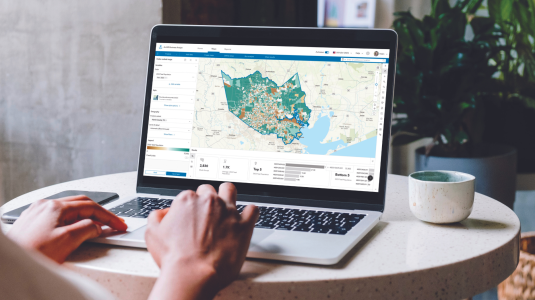
STDB is another frequently
used benefit among CCIMs. “When I’m doing tenant representation for retail
clients, STDB is a very valuable resource,” says Paula C. Smith, CCIM, a broker
associate with Osprey Real Estate Services in Clearwater, Fla. “During the site
selection process, it helps me find out what the market looks like in relation
to my clients’ businesses.”
“STDB makes my marketing
packages blow the competition out of the water,” Beery adds. “Other Realtors
and users call me often asking for a certain report, aerial, or statistic
because they know I’m one of the few that has access to the STDB platform.”